

Chiara Gatti and the Archivio Luigi Pericle association present a post-humous retrospective of Pericle’s works during the 58th Venice Art Biennale. Gatti discusses Pericle’s long-standing influence.
础:听Beyond the Visible聽is the first retrospective exhibition of Luigi Pericle, focusing on the critical recovery of the works, having been rescued. What types of works will be included in the show?
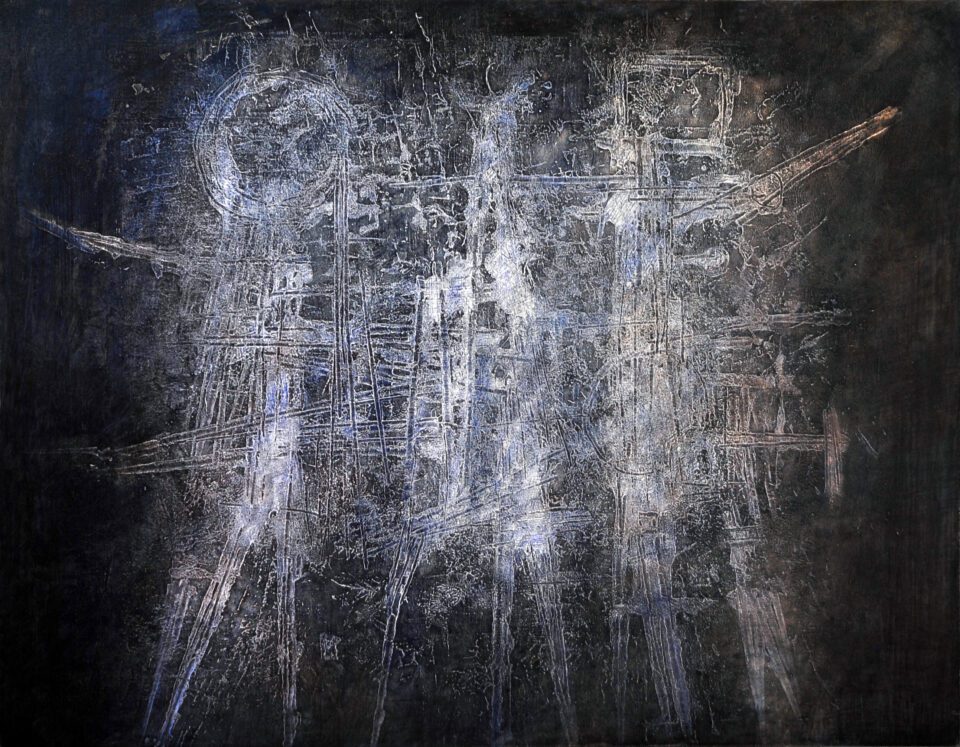
CG:The exhibition touches upon the various stages of Luigi Pericle鈥檚 career, following a chronological path throughout the 1960s and 1970s. The first work on display depicts an idealised and metaphorical alpine landscape, representing the only surviving specimen from a number of figurative paintings that Pericle destroyed. The composition is reminiscent of a mystical place 鈥撀爐he mountain is a symbol for knowledge. After preliminary works like these, the exhibition delves into the imaginative vision of a world populated by mysterious creatures 鈥撀爀ither mechanical or humanoid beings 鈥撀爋utlined expressively on both canvas and paper.聽
It is in this universe that we encounter the protagonists of Pericle鈥檚 allegorical images: the Uranian Golem, the Archangel, the Guardian of the Threshold. Mythical figures make their way onto the canvas amidst a miasma of colors. Ambiguous forces, arcane presences and protective deities, monstrous beings. A giant Icarus recalls the courage of man to challenge the gods by going beyond the boundaries granted to mortals. Sign on the Rock is a powerful stone idol that seems to have been subtracted from the culture of petroglyphs. Pericle鈥檚 work reflects the past, present and future through archaic and futuristic dreams 鈥� the works act as portals between the earth and the cosmos.
A: How do the works speak to each other in terms of composition, colour and form?
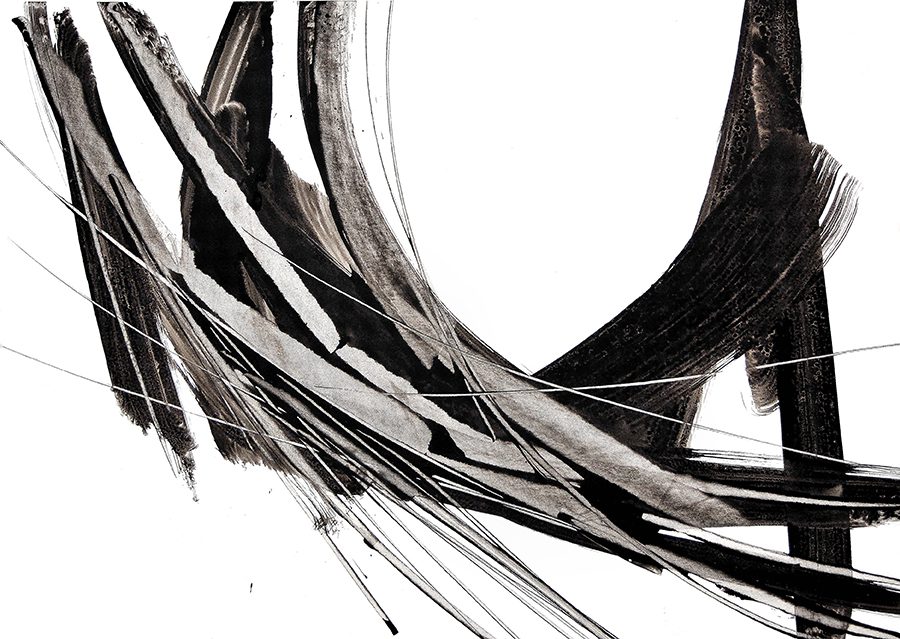
CG: Pericle flaunts a strong sense of colour and gesture. In the 1960s 鈥� against the background of European aesthetic research 鈥� he acted on the surface of chromatic balance between light and shade. He did so without neglecting the unconscious instinct brusthstrokes that emerge vigorously 鈥� especially in large ink drawings. The black lines, the strong dull greys and bright white tones are evidence of compositional mastery 鈥� recalling Hartung, Wols or Gorky.
A: Are there any recurrent themes throughout the works? Pericle was deeply involved in literature, philosophy and astrology. How do they interrelate?
CG:Pericle had a beautiful mind! He could easily move through the diverse disciplines of human knowledge, from a stricter cultural framework to a wider spiritual research. His studies of ufology, astrology, Egyptology, cosmology and kabalistic doctrines blend with physics and quantum mechanics.
Many of the details 鈥� concealed in his paintings 鈥� offer a four-dimensional continuum between microcosm and macrocosm. All this was further refined by his tireless study of cultures from the past, including Egyptian, Greek, Etruscan, Far Eastern and South American civilisations. His interests spanned from cave petroglyphs to Shinto rites of passage.
A: What inspired the artist, and how can this be seen in the works on display?
CG:Quoting British museologist Hans Hess: 鈥淧ericle is concerned with a state of affairs beyond the visible. The visions he puts down are not of his invention, but of discovery. He says that he is concerned with light, shining through darkness. It is light which finds forms and colors in his painting.鈥� In fact, the title of the Venice exhibition is聽Beyond the Visiblebecause it alludes to Pericle鈥檚 exploration of the occult 鈥� to a voyage beyond the borders of human experience, reaching a horizon dominated by the light of knowledge.聽聽
A: How have the works been selected / curated?
CG:The rich heritage preserved by the Archivio Luigi Pericle allowed for a selection of the most valuable paintings and drawings on paper, many of which were also exhibited at the aforementioned traveling solo show held in 1965. All specimens are documented and provide meaningful evidence of Pericle鈥檚 work that is consistent with the theme and chronological exhibition path. In addition, the catalogue features a selection of important works conserved in prestigious museums, from the Museo Comunaleof Ascona to the Museo d鈥橝rte della Svizzera Italianain Lugano, or the York and Bristol Museums, besides international private collections.
Courtesy of the Archivio Luigi Pericle.
A: How do the paintings translate into present-day society? What do they tell us about the human condition?
CG:As Pericle often recalled: 鈥淎rt, by its own nature, reflects man鈥檚 spiritual inclination and is like an instrument endowed with clairvoyance; art always has the presentment of future events.鈥� Pericle鈥檚 message is universal. It is still valid. It is extraordinarily up to date. The gaze pointed toward the cosmos speaks of a shared hope. Pericle cultivated famous 鈥渟eeds of Utopia鈥�, hoping for the birth of a new man, endowed with enlightened and intuitive spirit: 鈥淓ven though humanity shall go through a series of never before experienced catastrophes, the golden era of art yet has to come because it coincides with an evolutionary necessity.鈥�
Luigi Pericle: Beyond the Visible at the Venice Biennale, Fondazione Querini Stampalia, 11 May – 24 November. For more information, click
Lead Image: Luigi Pericle and his wife Orsolina on board their Ferrari, Ascons Museum Collection.


