The Calfornia-based artist and innovator is at the forefront of 21st
century communication, presenting a space between the physical and virtual.
Doug Aitken鈥檚 (b. 1968) practice is in a constant state of transformation and renewal. With each work, Aitken consistently explores different platforms and materials that turn away from tradition, heading into the unknown. The American artist has been featured in numerous esteemed exhibitions around the world including the Centre Pompidou, Paris; the Museum of Modern Art and the Whitney Museum of American Art, New York. He has also been awarded many prestigious accolades such as the International Prize at Venice Biennale, Americans for the Arts National Arts Award: Outstanding Contributions to the Arts and the Frontier Arts Prize.
Born in Redondo Beach, California, Aitken is renowned for large-scale experiential installations and films that question and intersect with the mechanisms of everyday life. 鈥淚n this moment in history it鈥檚 interesting for me to look at alternatives,鈥� he notes. 鈥淲here can we go from here? What other structures can be created to house concepts and ideas?鈥� As he puts it, we have 鈥渢horoughly mined the options of the white walled gallery space.鈥� What then, can be made beyond that, in the outside world of infinite possibility?
Aitken鈥檚 installations have travelled far and wide across the globe and across topographies. They have been immersed in the Pacific Ocean, flown over the state of Massachusetts and nestled into the stark white mountainside of the Swiss Alps. Each one is constantly in conversation with its exterior surroundings. 鈥淢y works live through space,鈥� he says. 鈥淭hey have a connectivity with the landscape, and they are really timepieces, changing continuously.鈥�
As well as responding to the planet and its various climates, Aitken鈥檚 pieces are often in conversation with the audience. 鈥淚nstead of being about the viewer seeing the static object and judging it, it鈥檚 about asking: 鈥楥an we have a dialogue between the two? A sense of push and pull between the artwork and the audience?鈥欌�� In the ambitious and far reaching Station to Station (2013), a kinetic light sculpture in the form of a train travelled from New York City to San Francisco making ten stops along the way for a series of 鈥渟ite-specific happenings鈥� in various cities including New York, Pittsburgh, Kansas City and Oakland. For Aitken, it was about offering a kaleidoscope of possible outcomes and interactions for the viewer.
A sense of limitlessness is also integral. 鈥淥ne piece could be defined as political for one person, and it could be a deeply personal reflection for another,鈥� he says. 鈥淸Art] is the space in our society that can accompany a spectrum of radical diversity.鈥� And yet with all these infinite possibilities that contemporary society 鈥� most notably, technology 鈥� presents us with, we move further away from what is real and tangible.
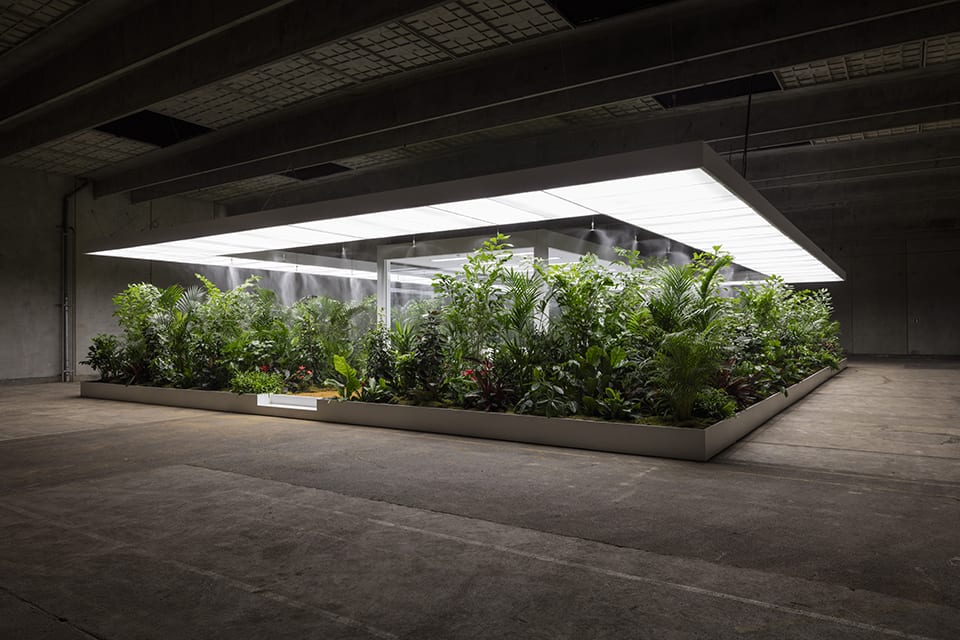
One of the biggest questions that Aitken investigates is the role the art plays within our seismic technological shift. The scale with which the digital age has affected our way of life is as monumental as the Industrial Revolution in the 19th century. 鈥淎s we鈥檙e moving forward, we find ourselves caught between two worlds: the screen realm 鈥� a zone of exhilarating information and data 鈥� and the other organic, physical plane,鈥� says Aitken. He played with this duality in The Garden, which recently closed at The Garage, Moscow. Described as a 鈥渓iving artwork,鈥� it was designed to embrace 鈥渢he dichotomy between a natural environment and a manmade experience.鈥�
Housed inside a concrete warehouse, a stark white glass chamber was surrounded by a humid botanical jungle, glowing under grow lights. When participants entered the glass chamber 鈥� which was dressed like a sterile, modern living room 鈥� they were given a baton. Many of them smashed up its contents entirely. 鈥淲e were thinking it could be used as an anger room, where people could destroy everything,鈥� says Aitken. 鈥淚 was very interested in how the natural landscape plays a part in this world we occupy. I was offering a sanctuary for unlimited freedom or anarchy, in a way.鈥�
This was taken one step further in his most recent exhibition, Return to the Real, currently at Victoria Miro, London, until
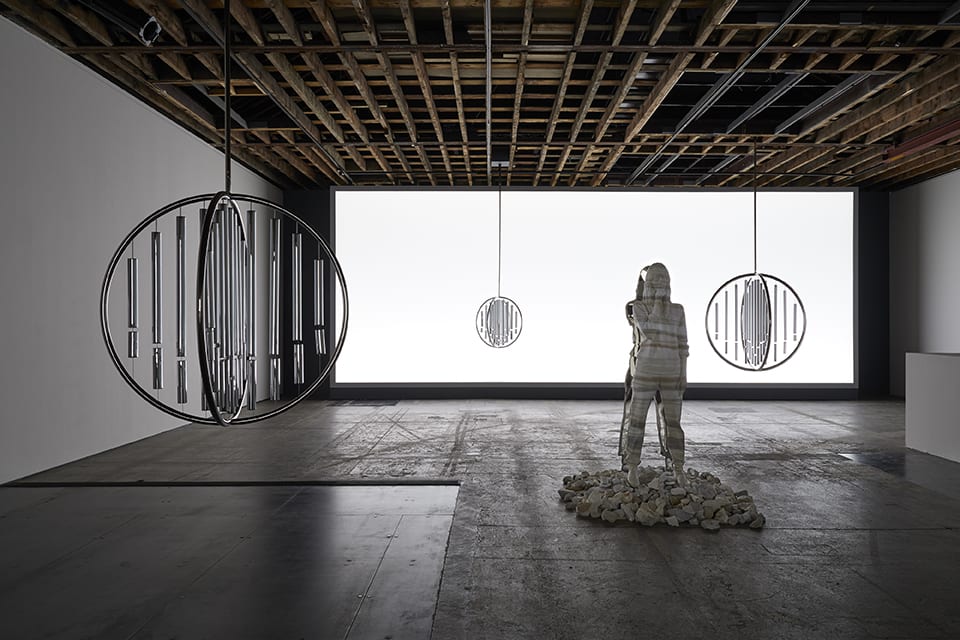
20 December, which considers the 鈥渃ondition of the individual鈥� in an age dominated by technology. The show comprises sound, light, form and movement and takes place across several floors. In the ground floor gallery, a figure made from translucent acrylic is centre stage, whilst on another level a woman 鈥� carved from Zebrino marble 鈥� is split in two, revealing a mirrored chamber. Meanwhile, in the garden terrace, a freestanding sculpture, complete with mirrored chimes, generates hypnotic sounds as the wind moves through it.
The installations are at once intangible and adrift 鈥� using kaleidoscope sound, lighting and colour 鈥� but rooted in classic media, like sculptures made from marble and stone. Unlike most of Aitken鈥檚 exhibitions, it is housed in a traditional white cube space. This provided much of the inspiration behind the piece. 鈥淲hat was interesting to me was how to make a liquid architecture 鈥� something which is a fluid and changing form 鈥� inside an already rigid space,鈥� he notes. 鈥淗ow can we create something that鈥檚 de-material in a very material space? How can we make something that can鈥檛 really be consumed or bought? This reality that is on view at Victoria Miro is almost hallucinogenic.鈥�
Also on view in London is New Era (2019), a video installation that looks at the first mobile phone call made in 1973. It is part of Transformer: A Rebirth of Wonder, a group exhibition curated by Jefferson Hack at 180 The Strand (open until 8 December). Hack notes: 鈥淚t speaks to 鈥楢ccelerationism鈥� 鈥� the beginning of hyper-individuality, which fast-forwards to the idea of a fragmented sense of self. We鈥檝e fallen into the screen, right? I think we鈥檙e now very used to this notion of existing in a world where we鈥檙e in conflict between our humanity and the machine, between nature and technology.鈥�
Aitken draws viewers鈥� attention to the contrast between natural and synthetic. In doing so, he inevitably points to the climate crisis. Though his works aren鈥檛 designed as a call to arms against global warming, they reflect upon our world today 鈥� conversations naturally develop about the environment. 鈥淚 offer different dialogues 鈥� I like that,鈥� he says. 鈥淛ust as a musician would make an album out of different songs, you can offer different levels of intimacy or activism. As an artist you can effectively cut across the spectrum.鈥�
That being said, he has collaborated with a number of high-profile environmental organisations. Underwater Pavilions, moored in the ocean off Catalina Island, for example, was made in collaboration with Parley for the Oceans, a global network that raises awareness about the fragility of marine life, and empowers a range of groups, from brands and designers and scientists. The installation consists of three geometric sculptures made from materials that are harmonious with the seascape. The structures were anchored to the ocean floor off the coast of southern California in 2016 and are due to reopen in a different ocean soon. The sculptures were mirrored to 鈥渞eflect the underwater seascape and present an observatory for the viewer.鈥� They were large enough so that swimmers could move through them. Aitken notes: 鈥淲hen we talk about the radical disruption we鈥檝e created within the sea, we鈥檙e not quite aware yet how much that鈥檚 going to affect us and our lives on land. The ramifications are immense. This is one thing which cannot be exaggerated.鈥�
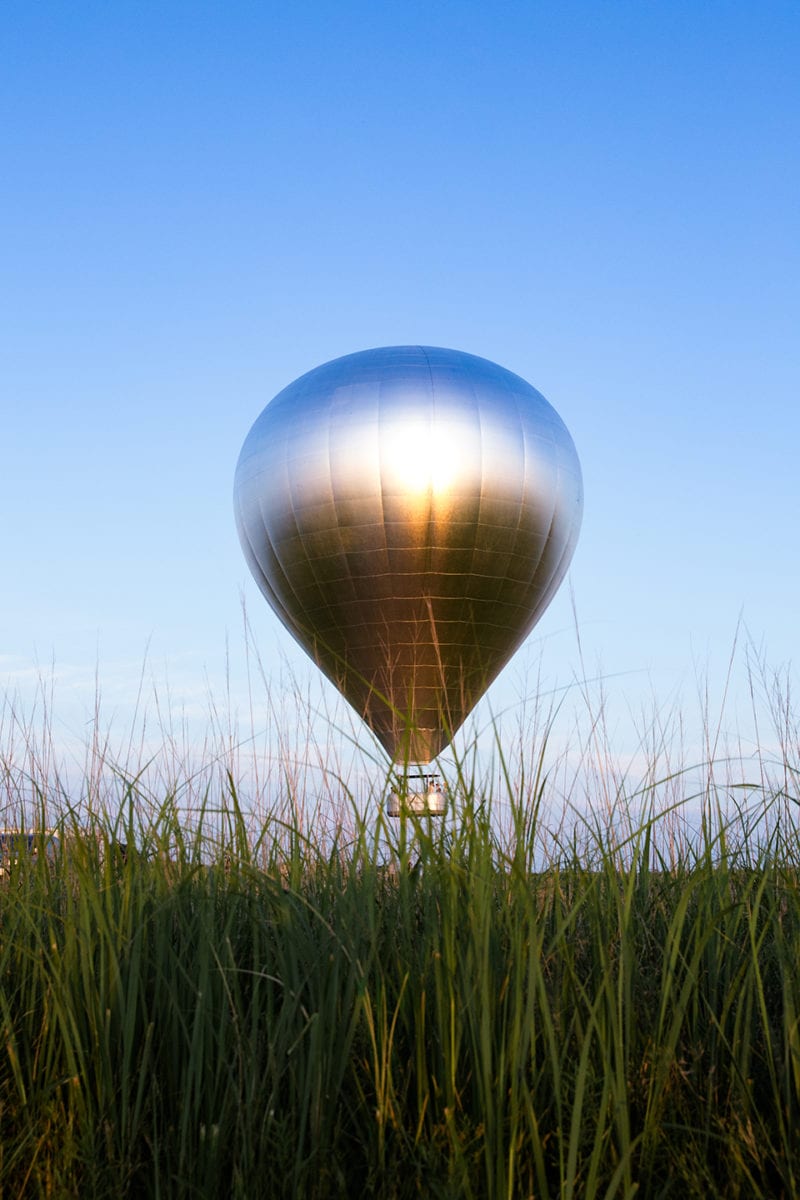
Meanwhile, in June 2019, Aitken created a flying sculpture that travelled across Massachusetts. Titled New Horizon, it flew over various sites that are managed by The Trustees 鈥� the oldest non-profit preservation and conservation collective in America. Aitken consulted with NASA to develop the semi-mirrored textile for the main body, which was intended to reflect the landscape when flying during the day. At night, it was illuminated by LED lights that are hand-sewn throughout the material. 鈥淚t was about activating the topography by using the concept of disruption; encouraging moments that are uncontrollable and unexpected,鈥� he notes. 鈥淚t might be rush hour traffic at 8.00 a.m. on a workday and you see this large sculpture floating by, completely unannounced and randomly placed, like a wedge in the plane of reality.鈥�
Paradoxically, Aitken believes that, as we progress further from the 鈥渞eal鈥�, art will become our anchor. We live in an age of over-circulation, data dissemination and image saturation, where the visual landscape is both fast and shallow. 鈥淧ictures replace each other at a radical rate, and this is a new condition for us to occupy,鈥� says Aitken. 鈥淗ow won鈥檛 this affect what we express?鈥� Though art will no doubt develop in concept and design, paralleled with technology, it may also help us slow down and 鈥渇reeze a moment in time.鈥� 鈥淚n many ways I think we will find that the value of future artworks will be in re-connecting audiences with the physical world 鈥� allowing us to decelerate and engage with the present.鈥�
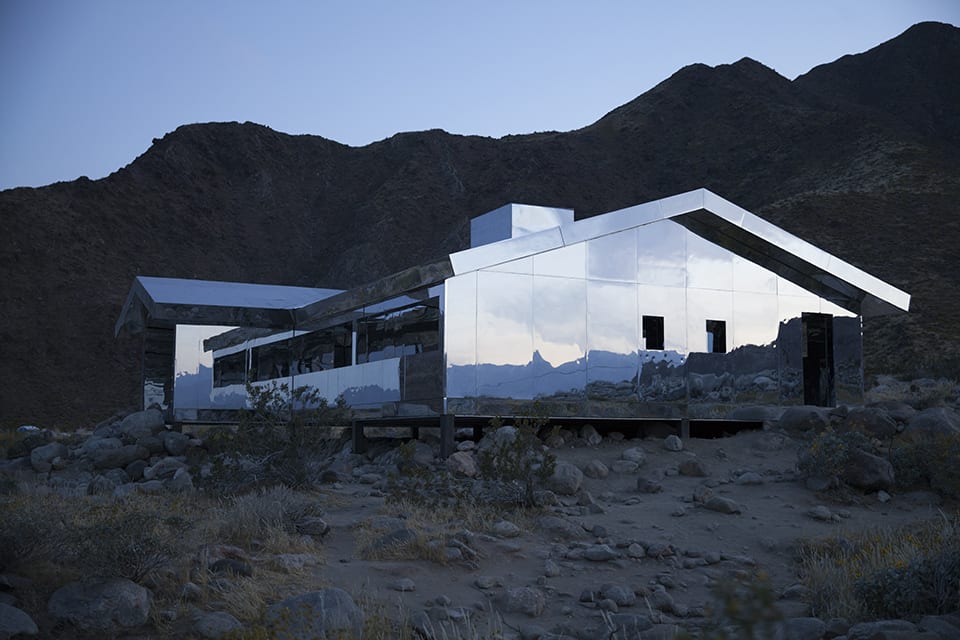
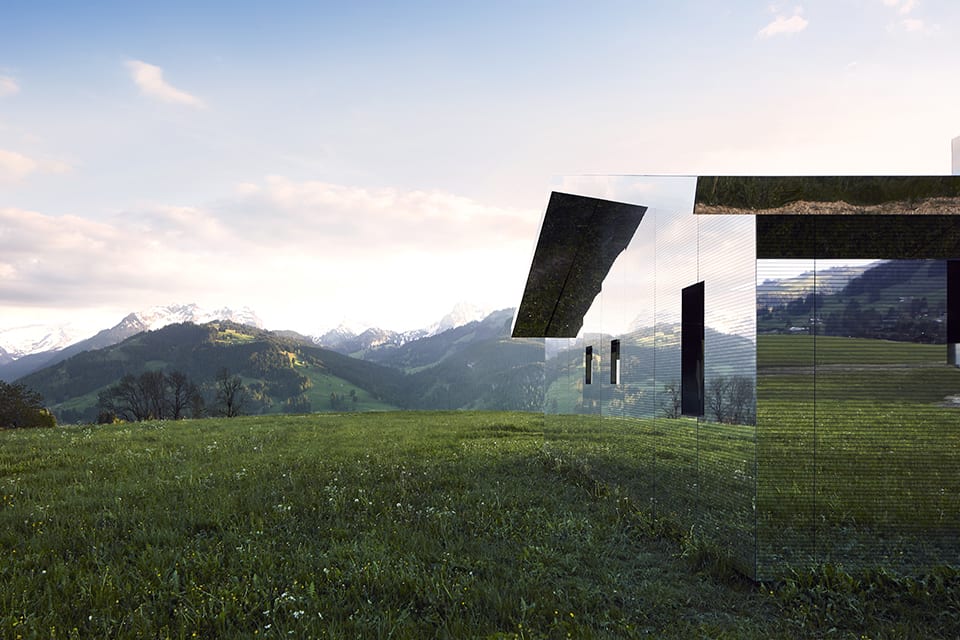
Of course, this is something that Aitken has already done with Mirage 鈥� a mesmerising mirrored house, which has moved from Desert X in Palm Springs via Detroit to its current location in Gstaad, Switzerland. In the tradition of land art as a reflection of dreams and aspirations projected onto the American west, the building presents a dynamic encounter in which subject and object, inside and outside are in flux. The reflection of the landscape changes as the viewer moves round the structure. A one-storey suburban house becomes a framing device 鈥� a perceptual echo-chamber.
Much like Mirage, Aitken鈥檚 output cannot be easily contained. It may not be surprising then, that he feels a sense of detachment once the installations are completed. Some of the most valuable moments of creation, he says, are when he has been working on something for some time and it suddenly becomes unfamiliar. 鈥淭here鈥檚 always the question about when a given piece is complete. In my mind, it鈥檚 when you鈥檙e no longer the author. You鈥檙e trying to provide nutrients, to get it where it needs to be. Then it鈥檚 no longer yours.鈥�
Though he cannot reveal exactly what鈥檚 on the cards for the future, Aitken says that for new projects he鈥檚 interested in the mechanisms behind our perception. He notes: 鈥淐an a simple idea construct a complex system, and can this have the integrity to form something new entirely?鈥� Aitken has spent an entire career pondering cryptic questions such as these. When our societies are becoming increasingly fractured, his practice presents a sense of refuge connecting audiences. Looking ahead to 2020, he will continue to do just this.
Alexandra Genova

Doug Aitken, Mirage, 2017. Desert X installation view. Courtesy the artist and Desert X. Image by Doug Aitken Workshop. Doug Aitken, New Horizon, 2019. Image courtesy of the artist and the Trustees of Reservations; Photography by Carmen Ellis.
Doug Aitken, installation view of The Garden, 2017. Photograph by Anders Sune Berg. Courtesy the artist and ARoS Aarhus Kunstmuseum. Doug Aitken, Inside Out, 2019. Installation view from Return to the Real at Victoria Miro, Wharf Road, London, 2 October – 20 December 2019. 漏 Doug Aitken. Courtesy Victoria Miro.
Doug Aitken, Mirage Gstaad, 2019. Installation view at Elevation 1049, Gstaad, Switzerland. Courtesy of the artist and LUMA Foundation; Photography by Torvioll Jashari.