

The inaugural edition of UK鈥檚 largest dedicated sculpture festival comes on the heels of a global reappraisal of what it means to create and communicate with objects today. pushed to innovative heights with Marta Minuj铆n鈥檚 (2017) at Kassel, representing the global degradation of fundamental democratic rights. At edition, the goal was to to meditate on everyday soundscapes. Cerith Wyn Evans鈥� A Modified Threshold (2017) enacted a minimal decrease in temperature at M眉nster鈥檚 St Stephanus Church, cooling its bells to a higher ringing pitch.
Artists are increasingly pursuing ideas about what constitutes sculpture 鈥� pushing beyond made objects to think about how space can instead be transformed with presence, absence, movement, sound, colour, temperature and light. As with Ai Wei Wei鈥檚 Soleil Levant (2017), of 3,500 discarded, bright orange life jackets used by migrants who fled to Lesvos, Greece, these interventions are also increasingly drawing attention to the world鈥檚 political and social urgencies, utilising objects for their symbolic power.
Yorkshire Sculpture International (YSI) is a free 100-day festival placing the UK firmly on the map of this worldwide surge in sculptural practice by foregrounding the particularly rich creative legacy of Yorkshire. Featuring new public commissions in Leeds and Wakefield and a programme of free events, YSI occupies four world-renowned galleries that constitute the Yorkshire Sculpture Triangle: The Henry Moore Institute, Leeds Art Gallery, The Hepworth Wakefield and Yorkshire Sculpture Park. 鈥淥ur international and local artists all embrace different mediums,鈥� explains Jane Bhoyroo, Festival Producer; showcasing this breadth and diversity in practice, YSI鈥檚 exhibitions respond to global conversations around the future of labour in an automated world, the demonisation of migrants, the destruction of the environment, and spirituality in an age of fast-paced urban lifestyle.
Making objects is an inherently human act, whether for aesthetic, functional, spiritual purposes. This notion forms the theme for YSI. 鈥淲e wanted to invite an artist to provoke us,鈥� explains Bhoyroo. They turned to British artist Phyllida Barlow, Britain鈥檚 representative at the 2017 Venice Biennale, and chose one of her several proposals: 鈥渟culpture is the most anthropological of the art forms.鈥� This curatorial theme is boldly historicising: it reminds us, not long after tragedies like by ISIS in 2015, that the objects we make form one cornerstone of our common human heritage. Whilst gesturing to the past, to demonstrate 鈥渢he rich potential of what the medium can be 鈥� the more confrontational, surprising, difficult and thought-provoking, the better.鈥�
Bringing 18 international artists from 13 different countries to the public, YSI comes at a time of radical rethinking around the cultural lives of objects in the West. Once ivory towers, museums have the site of demonstrations, , and alternative guides. In the USA, movements like , an action-oriented movement centering indigenous struggle and black liberation, are staging protests at and on issues ranging from the lack of diversity in the arts and heritage sector to the of Brooklyn. Activists in the UK that The British Museum and The Natural History Museum repatriate objects of cultural and spiritual value taken from formerly colonised peoples, such as the (stone statues representing deified ancestors) that belong to the Rapa Nui people of Easter Island. The importance of objects in this social movement can only grow, as the legitimacy of Western institutions鈥� ownership of non-Western artefacts.
A group exhibition at The Henry Moore Institute asks precisely such questions of history, race and social justice. , , , and use a broad range of media to investigate human behaviour through material culture. Lynch questions historical providence and verification in his project for the Henry Moore Institute Research Library, Flint Jack (2019). Loboda鈥檚 Chosen (2019), a series of 1920s-inspired lamps that encase select insects, reflects on the fallibility of collecting for preservation; Smith, who will be screening her 2018 film Sojourner, imagines a radical feminist utopia. Chicago-born Johnson will manipulate natural and synthetic materials to examine issues of roots and identity for African-Americans, whilst Harpaz, who uses light, mirrors and lenses to create uncanny optical illusions, will present an installation that examines systems, borders and beliefs.
鈥淲e have practitioners who are working with performance in the public realm; some are using new technologies; some are making by hand, from clay, wood, and string,鈥� Bhoyroo observes. Working with the latter organic materials is Texas-born at The Hepworth Wakefield, complementing the socio-political themes of the Henry Moore five. Durham鈥檚 practice often combines parts of industrial equipment and domestic furniture to explore the human urge to control the properties of natural materials like metals and wood. His totemic new sculptures will be displayed alongside and in dialogue with early pieces by Barbara Hepworth and Henry Moore from the institute鈥檚 collection.

Courtesy of Cadhame Halle verri茅re de Meisenthal.
Also participating is Turkish artist , with an outdoor installation that responds to a historic building in the centre of Leeds. Transforming her surroundings through eye-catching and multi-sensory interventions, Erkmen鈥檚 site-specific creations react to their environments in a social, architectural or political way 鈥� often employing colour, form and sound to draw attention to things overlooked or hidden. The inclusion of Erkmen, who has created several international public realm commissions including Ghent (Broche, 2017) and Meisenthal (Glassworks, 2015), reflects the important role of outdoor pieces at YSI: 鈥淲e hope they will encourage people to come over the threshold of the institution to make new discoveries,鈥� Bhoyroo proposes. 鈥淭he majority of the exhibits and events are completely free: introducing the form to new audiences is important to us.鈥�
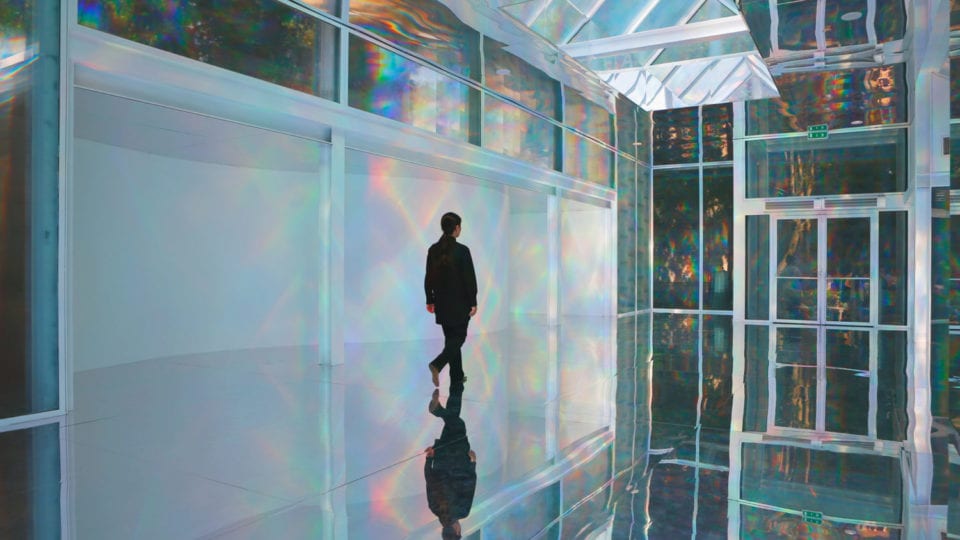
In nearby Leeds Art Gallery, 鈥檚 new project takes over a gallery space with her series of photographs, Frantic, which examine the complex power dynamics and psychological effects of human relationships. at Tate Britain as part of its Art Now series on emerging artists, Piotrowska鈥檚 photography and film installations explore domestic violence and women鈥檚 means of empowerment. Amongst these strongly political themes, 鈥檚 installation To Breathe (2019) gives the viewer a literal space to pause and reflect: the South Korean conceptual artist transforms the historic chapel at Yorkshire Sculpture Park into an installation of light and mirrors that investigates the transformative qualities of space.
In a welcome move away from the insularity of the art world, the YSI reaffirms the social role that public art plays today. Through an extensive engagement programme involving schools, universities and locals 鈥� including refugee communities in Wakefield 鈥� the festival nurtures the next generation of worldwide talent, with a special interest in Yorkshire鈥檚 youth. 鈥淲e live in an age where we are very much glued to our screens. We want people to think about what it means to make something by hand, and what that connection with objects can mean,鈥� Bhoyroo proposes. The region鈥檚 celebrated names and its up-and-coming generation of makers are key sources of inspiration. 鈥淓ncouraging awareness of the history of sculpture in the region, we want to help artists think of Yorkshire as a viable and inspiring base. A blend of cityscape and landscape, its supportive environment can provide the space and time for creative growth.鈥�
YSI has ambitions to realise the festival every four years, keeping the majority of its events free. 鈥淲e want to build a legacy from this project,鈥� Bhoyroo hopes. 鈥淭his year, several of our practitoners are responding to debates around new technologies and the environment: these are things we want to continue exploring in the future.鈥� Responding to our current environmental, social and political concerns whilst investing in tomorrow鈥檚 talent, multi-faceted initiatives like YSI will prove invaluable for the future of public art in the UK.
Yorkshire Sculpture International runs 22 June – 29 September. Find out more
Sarah Jilani
Lead image: Rashid Johnson, Antoine鈥檚 Organ 2016. Image by Martin Parsekian. Courtesy of the artist and Hauser & Wirth.


